Golden Triangle Itinerary
How to Plan the Perfect Week in Delhi, Agra and Jaipur
Three cities, three hundred years of Mughal and Rajput history, and one perfectly paced week. A day-by-day plan for the Golden Triangle.
Delhi, Agra and Jaipur form a rough triangle on the map of northern India, and together they hold some of the most extraordinary monuments in the world. It is the classic first journey through India, and for good reason: in a single week you move from Mughal tombs to the Taj Mahal to the pink-walled palaces of Rajasthan.
This day-by-day Golden Triangle itinerary is paced for travellers who want to see the essentials without rushing them.
How long do you need for the Golden Triangle?
Seven days is the sweet spot. It allows two full days in Delhi, a sunrise at the Taj Mahal, and enough time in Jaipur to explore its forts and bazaars at an unhurried pace. You can do the circuit in five days, but you will spend much of it in the car.
Getting around
The most comfortable way to travel the Golden Triangle is by private car with a driver. Approximate road distances:
| Route | Distance | Typical drive |
|---|---|---|
| Delhi to Agra | About 230 km | 3.5 to 4 hours |
| Agra to Jaipur | About 240 km | 4.5 to 5 hours |
| Jaipur to Delhi | About 280 km | 5 to 6 hours |
Drive times vary with traffic and the stops you make along the way.
Day 1: Arrive in Delhi
Arrive, settle in and rest. If you have energy in the evening, take a gentle walk around Lodhi Garden, where fifteenth-century tombs sit among lawns and old trees.
Day 2: Old and New Delhi
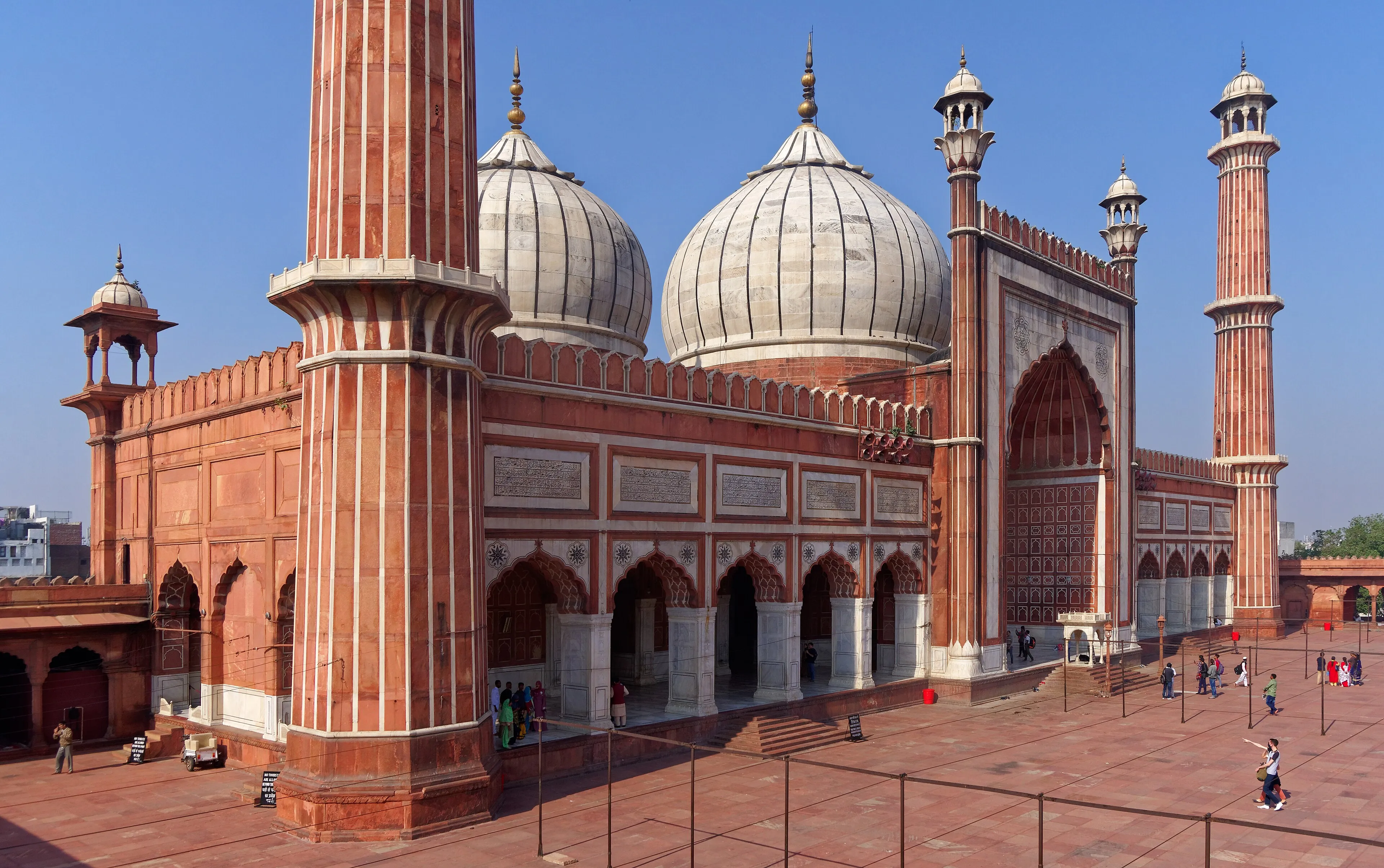
Begin in Old Delhi at Jama Masjid, one of India’s largest mosques, then explore the lanes of Chandni Chowk with a local guide, ideally on foot or by cycle rickshaw. In the afternoon, visit Humayun’s Tomb, a UNESCO World Heritage Site whose gardens and proportions inspired the Taj Mahal. End the day at the Qutub Minar complex, another World Heritage Site, as the light softens.
Day 3: Delhi to Agra
Drive to Agra on the Yamuna Expressway. After lunch, explore Agra Fort, the great red sandstone citadel of the Mughal emperors. Before sunset, cross the river to Mehtab Bagh, a garden directly opposite the Taj Mahal, for a quiet first view of the monument across the water.
Day 4: The Taj Mahal at sunrise, then on to Jaipur
Be at the Taj Mahal gates as they open at sunrise, when the marble shifts from grey to gold and the crowds are thinner. One important note: the Taj Mahal is closed on Fridays, so plan your Agra days around it.
After breakfast, drive towards Jaipur. Stop at Fatehpur Sikri, the abandoned Mughal capital, and if time allows, at Chand Baori in Abhaneri, one of the deepest and most dramatic stepwells in India.
Day 5: Amber Fort and the hills of Jaipur
Start early at Amber Fort, set on a ridge above Maota Lake, before the day warms up. Wander the Sheesh Mahal, the mirrored hall that sparkles with the smallest light. Nearby, the geometric steps of Panna Meena ka Kund make a striking stop, and you can pause to see Jal Mahal floating in Man Sagar Lake on the way back into the city.
Day 6: The Pink City
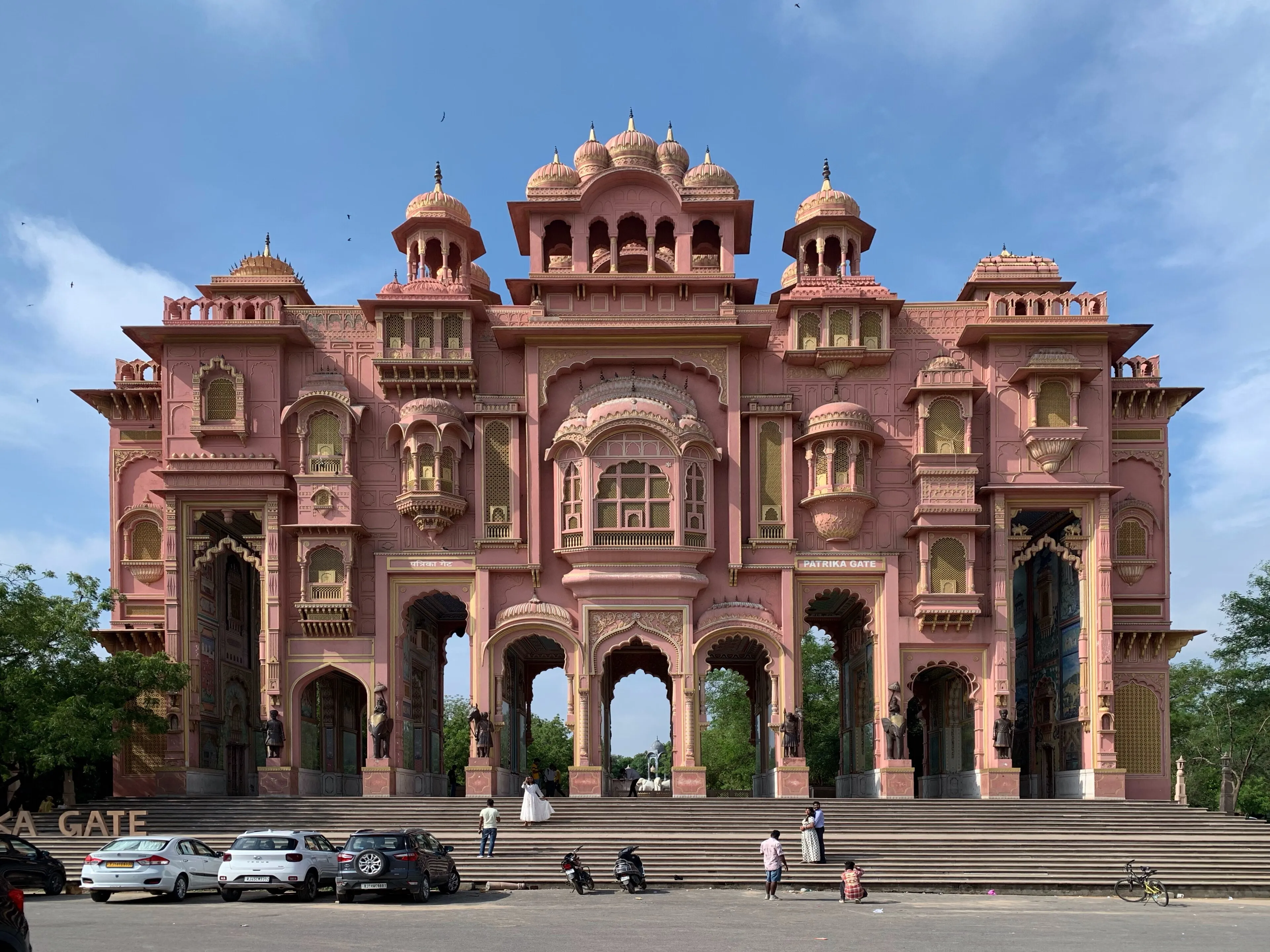
Spend the day inside the old walled city. Visit the City Palace, still home to Jaipur’s former royal family, and Jantar Mantar, the eighteenth-century astronomical observatory recognised as a UNESCO World Heritage Site. Photograph the honeycomb facade of Hawa Mahal, the Palace of Winds, then lose yourself in the bazaars for textiles, block prints and jewellery.
Day 7: Return to Delhi, or continue
Drive back to Delhi for your onward flight, or extend your journey deeper into Rajasthan.
How to extend your Golden Triangle tour
With a few more days, Rajasthan opens up:
- Jodhpur, the Blue City, beneath the immense Mehrangarh Fort
- Udaipur, the City of Lakes, with palaces reflected in Lake Pichola
- Ranthambore, for a chance to see tigers in the wild
Our Royal Passage follows exactly this idea: eleven days from Delhi through Agra, Jaipur, Jodhpur and Udaipur, with time built in to enjoy each place properly.
Tips for a smoother journey
- Travel between October and March for the most comfortable weather.
- Plan around Friday closures at the Taj Mahal.
- Start early. Monuments are cooler, calmer and more beautiful in the first hours of the day.
- Use licensed guides at major sites. They bring the history to life and help you avoid queues and touts.
- Dress modestly for mosques and temples, and carry a scarf.
Frequently asked questions
Is the Golden Triangle worth it for first-time visitors?
Absolutely. It packs three of India’s most remarkable cities and several UNESCO World Heritage Sites into a manageable week, with excellent hotels and well-established routes.
Should I travel by train or by car?
Fast trains connect Delhi and Agra, but a private car gives you the freedom to stop at places like Fatehpur Sikri and Abhaneri, which are hard to reach otherwise.
What is the best order to visit the Golden Triangle cities?
Most itineraries run Delhi, Agra, Jaipur and back to Delhi. It keeps drive times balanced and saves the colour of Jaipur for the end.